

Modeling When You’re Not Even Trying

.svg)


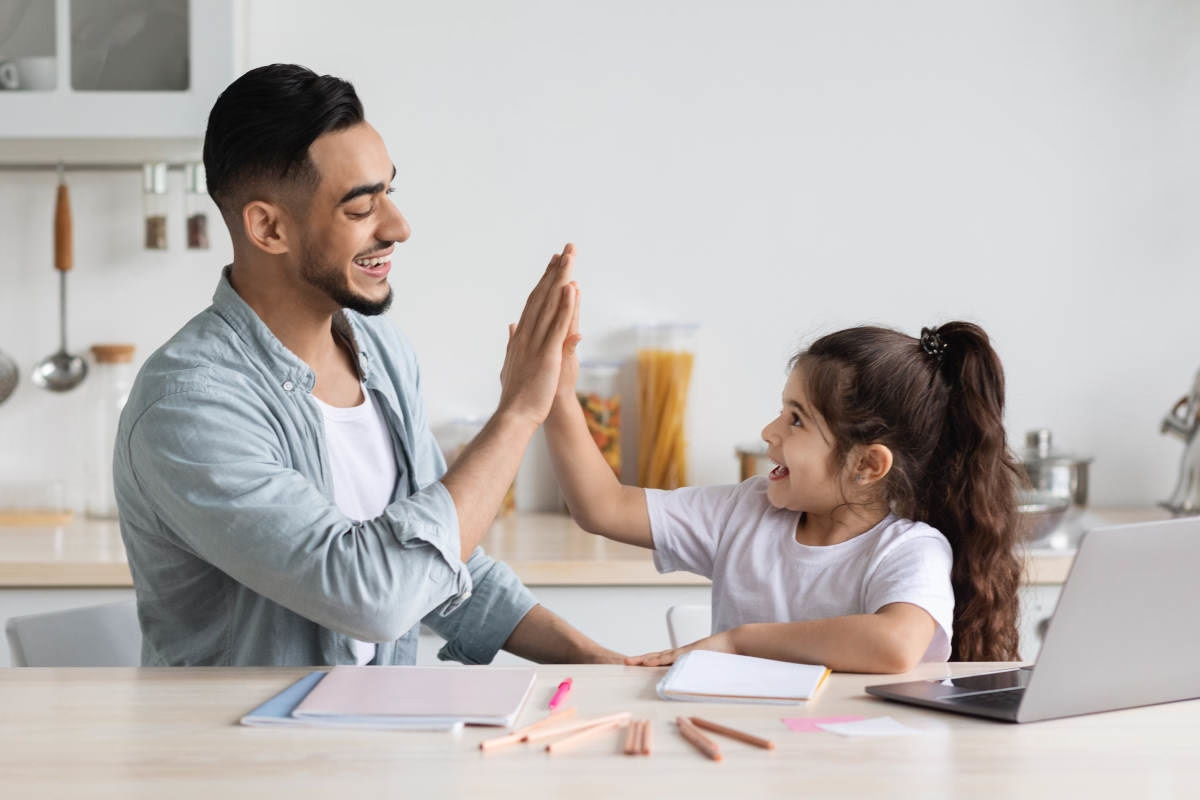
As dads, most of us think about our fathering in terms of what we’re intentionally trying to do — the time together, the talks, the deliberate moments of guidance. But the most formative influence may be happening in the gaps: the unplanned moments, the unconscious habits, the everyday behaviors and patterns we model without realizing we’re modeling anything at all.
Novelist Umberto Eco made a similar observation:
I believe that what we become depends on what our fathers teach us at odd moments, when they aren’t trying to teach us. We are formed by little scraps of wisdom.
Some have even suggested that as much as 99 percent of the behavior that influences a child is unpremeditated — not planned but absorbed; not taught but caught. That number may be on the high end, but consider what children are constantly taking in from their dads: tone of voice, gestures, posture, daily routines, how dad responds when things go wrong, whether he’s present or distracted. Even if the real figure is closer to 70 percent — or even 30 or 40 percent, that’s still a meaningful amount of influence happening during moments that most dads never stop to consider.
What They’re Catching
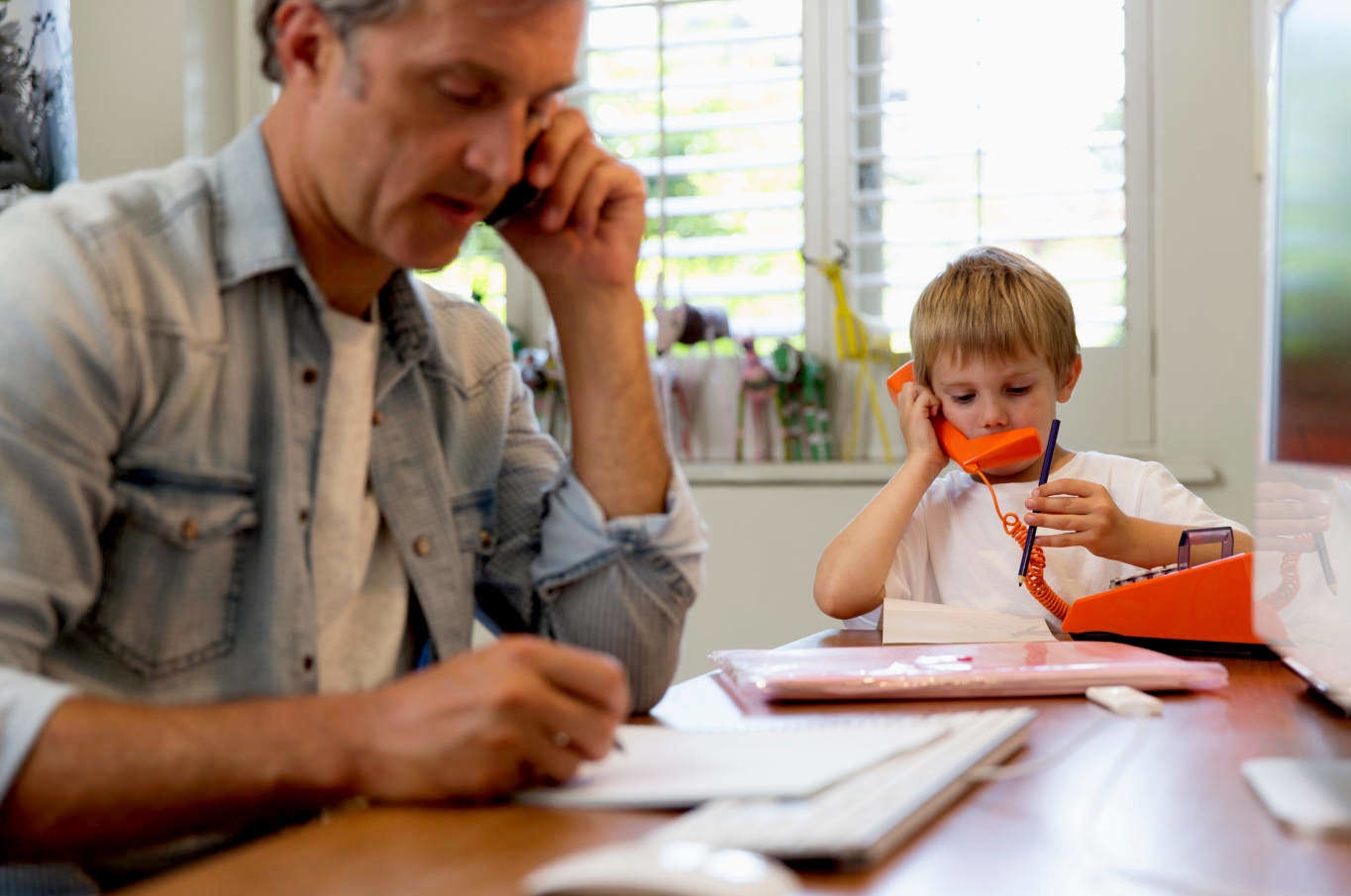
Kids are natural-born imitators, like the toddler who pretends to talk on a cell phone or the little one pushing a toy lawnmower across the yard. They copy the way we talk, the habits we repeat without thinking, even the tone we use when we’re frustrated. That’s why it can stop you cold when your child says a word you use all the time that suddenly doesn’t sound so appropriate coming from a four-year-old.
Modeling is happening in your home every moment of every day, and much of it is outside your control. You don’t get to decide what your children absorb from you and what they let go. The parts of your life you’d least want your kids to imitate? Many of those are on display too.
That’s a sobering thought — and it cuts both ways. Because modeling carries so much influence, your kids are just as likely to absorb your patience, your integrity, and your kindness as they are your frustration or your carelessness. Some of life’s most important lessons are passed on by presence more than by purpose. What are your kids catching from you in the areas of honesty, how you treat their mom, how you respond when things don’t go your way?
Your Life Before Them
Author and professor Dorothy Kelley Patterson offered this observation:
My children will not remember the words of wisdom I’ve passed along over the years, nor will yours remember the good advice you’ve given. However, etched in their minds and planted in their hearts is a permanent picture of who you are and how you’ve lived before them.
To be clear, words do matter; most of us can still hear something our own fathers said that stuck with us for decades. But what children see tends to create the more lasting impression. And the moments that leave that impression are rarely the ones we planned.
Maybe your daughter is with you when you go back to the store because the cashier didn’t charge you enough. Maybe your son is in the car when you stop to help someone stranded by the side of the road. It might be how you talk about people when they aren’t present. Or the way you speak to your wife with gentleness ... or with an edge in your voice. It might be the words “I was wrong. I’m sorry. Will you forgive me?“ — or the conspicuous absence of those words.
These aren’t lesson plans; they’re just life. But they’re forming a permanent picture in your children’s minds.
Even When You’re Not There
Here’s the part that might be most surprising: your modeling doesn’t stop when your kids aren’t with you. Consider the dad who spends his Tuesday evenings transporting supplies for a soup kitchen. Or the one who drives across town to help someone with a household repair. Their children weren’t with them, but those kids will grow up knowing what their father is made of — how his integrity is being shaped and expressed when no one is keeping score.
Character is holistic. The man who shows up consistently in his community, his workplace, and his friendships is the same man who comes home to his kids every night. As a dad grows in honesty, in generosity, in how he treats people, that growth finds its way into his fathering, often in ways neither he nor his kids could easily name.
This may be especially meaningful for dads who aren’t able to be with their children as much as they’d like. Who you are when you’re apart still shapes your children — your poise, your consistency, your positive attitude, the way you treat people, doing what’s right even when it’s difficult. That influence might not always be immediately apparent, but it’s there. Character travels.
Dad, one day your children will catch themselves doing or saying something, and they’ll recognize exactly where it came from. What will they be tracing back to you?
Questions to Consider
If you asked your children what they’ve learned from you just from watching how you live, what do you think they’d say?
What parts of your life would you be uncomfortable seeing reflected back in your child’s behavior?
Who are you when you’re not with your kids — at work, in your community, in private? Does that person match the father you want to be?
What habits, values, or patterns do you carry today that you can trace back to watching your own father?

.svg)

.svg)